For parents
Who is at risk?
For many years RSV was treated as a problem for premature babies or children with heart and lung disease. That view no longer holds.
Key message All infants are at risk from RSV. Certain clinical conditions raise that risk — but a large share of infants admitted to hospital do not fall into those classic risk categories.
What the data from Türkiye show
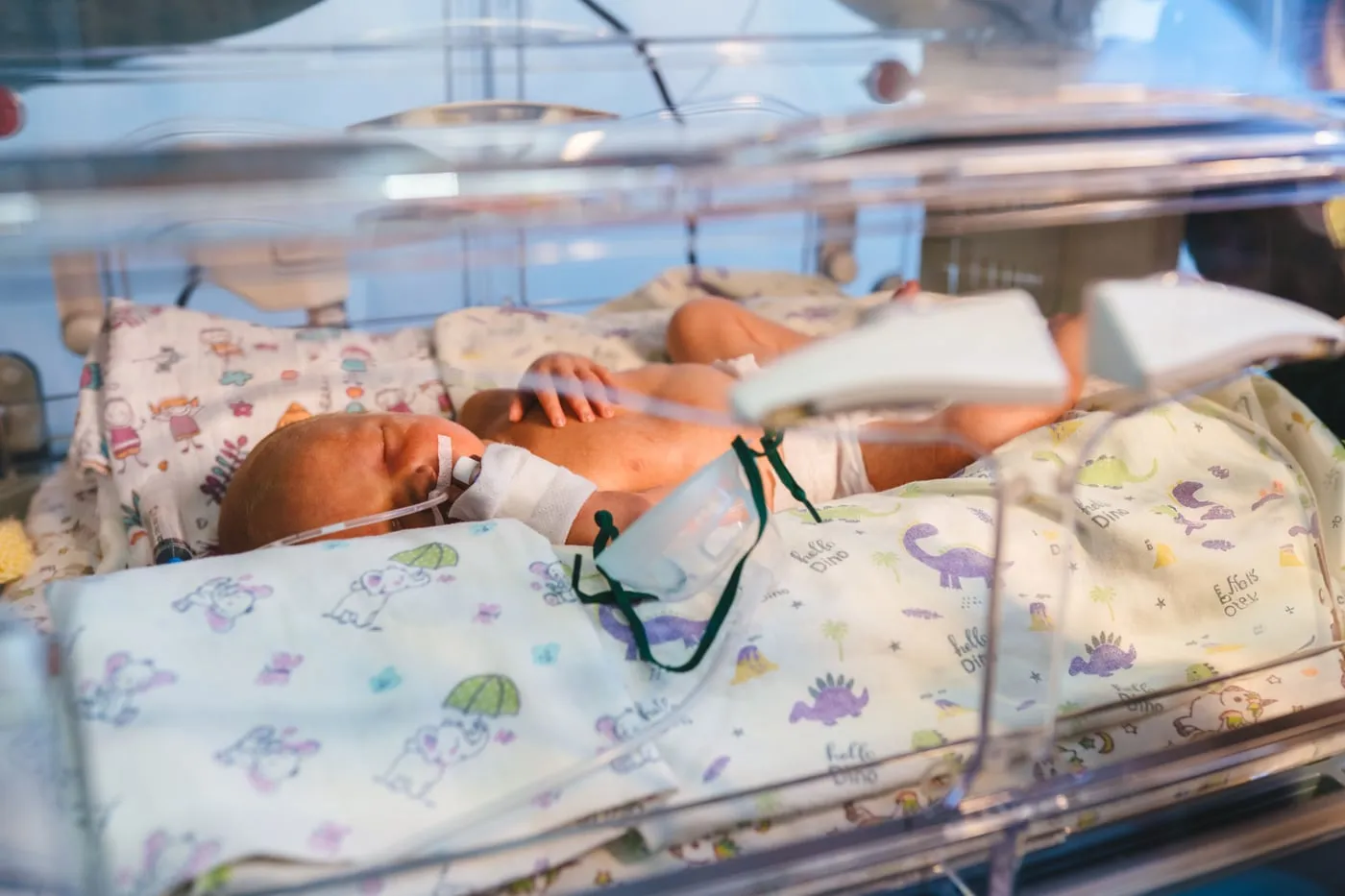
The multicentre RSVP study, covering many paediatric intensive care units across Türkiye, assessed 646 children admitted with RSV infection between 2020 and 2024. The results are unambiguous:7
- 70% Proportion of intensive care admissions aged under 12 months RSVP Study 2020–2024
- 70.6% Proportion who had no underlying chronic condition RSVP Study 2020–2024
- 25.5% Proportion requiring invasive mechanical ventilation RSVP Study 2020–2024
These data set out clearly both the direct burden RSV places on paediatric intensive care in Türkiye and the severe illness it can cause in a healthy population outside the risk groups.7
Conditions that increase risk
It is beyond dispute that the risk of severe RSV disease is far higher in certain clinical conditions.4 The following raise risk markedly:
-
Other chronic conditions
Severe cystic fibrosis; and neuromuscular disorders, especially those causing difficulty swallowing or clearing mucus secretions.5
Are only infants at risk?
No. RSV can also cause serious lower respiratory tract infections such as bronchiolitis and pneumonia in adults over 65.9 According to US data, RSV causes an estimated 58,000–80,000 hospitalisations a year in children under five, while in adults over 65 the figure ranges from 60,000 to 160,000.12 Epidemiological evidence suggests that the impact of RSV in older adults, both in the community and in long-term care facilities, may be comparable to non-pandemic influenza.11
For this reason the aim is to reduce RSV burden not only in infancy and childhood but across the whole life course.
Risk is not only biological. Poverty, household crowding, difficulty accessing health services, low health literacy and undernutrition all directly increase the risk of severe RSV disease and death.10 These conditions place RSV mortality on common ground with other preventable infant deaths.
Sources
- Dallagiacoma, G., Pierantoni, L., Lanari, M., & Pession, A. (2025). Risk factors for severe outcomes of respiratory syncytial virus infection in children. The Lancet Regional Health – Europe, 41, 100923. doi.org/10.1016/j.lanepe.2024.100923
- Fonseca, M. J., Azevedo, L., Rodrigues, E., Santos, J., & Nunes, B. (2024). Respiratory syncytial virus hospital admission rates and characteristics among infants and young children: A population-based study. The Pediatric Infectious Disease Journal, 43(9), 749–755. doi.org/10.1097/INF.0000000000004355
- Wildenbeest, J. G., Korsten, K., & Bont, L. J. (2022). The burden of respiratory syncytial virus in healthy term-born infants: A systematic review and meta-analysis. Infectious Diseases and Therapy, 11, 1891–1913. doi.org/10.1007/s40121-022-00666-5
- American Academy of Pediatrics, Committee on Infectious Diseases. (2024). Respiratory syncytial virus. In Red Book: 2024–2027 report of the Committee on Infectious Diseases (33rd ed., pp. 713–721). American Academy of Pediatrics. doi.org/10.1542/9781610027373-S3_017_003
- Centers for Disease Control and Prevention (CDC). RSV in infants and young children. www.cdc.gov/rsv/infants-young-children/index.html · 2026-08-04
- Lodi, L., Gori, D., Ricci, B., Dondi, A., Biagi, C., Lanari, M., & Esposito, S. (2024). Risk factors and outcomes of respiratory syncytial virus infection in infants and young children: A systematic review. Frontiers in Pharmacology, 15, 1381107. doi.org/10.3389/fphar.2024.1381107
- Çoban, Y., Evren, G., Yıldızdaş, D., Zengin, N., Bal, L., Kendirli, T., ve ark., & Dinleyici, E. Ç. (2026). Burden, risk factors, and outcomes of respiratory syncytial virus (RSV) infection in pediatric intensive care units in Türkiye (RSVP Study 2020–2024). BMC Pediatrics, 26(1), Article 298. doi.org/10.1186/s12887-026-06562-7
- Li, Y., Wang, X., Blau, D. M., Caballero, M. T., Feikin, D. R., Gill, C. J., Madhi, S. A., Omer, S. B., Simões, E. A. F., Campbell, H., ve ark., & Nair, H. (2022). Global, regional, and national disease burden estimates of acute lower respiratory infections due to respiratory syncytial virus in children younger than 5 years in 2019: A systematic analysis. The Lancet, 399(10340), 2047–2064. doi.org/10.1016/S0140-6736(22)00478-0
- Mazur, N. I., Higgins, D., Nunes, M. C., Melero, J. A., Langedijk, A. C., Horsley, N., Buchholz, U. J., Openshaw, P. J. M., Pollard, A. J., & Nair, H. (2024). Respiratory syncytial virus. The Lancet, 403(10439), 1541–1555. doi.org/10.1016/S0140-6736(24)00314-2
- Zar, H. J., Cacho, F., Kootbodien, T., Mejias, A., Ortiz, J. R., Stein, R. T., & Hartert, T. V. (2024). Early-life respiratory syncytial virus disease and long-term respiratory health. The Lancet Respiratory Medicine, 12(10), 810–821. doi.org/10.1016/S2213-2600(24)00121-6
- Falsey, A. R., & Walsh, E. E. (2005). Respiratory syncytial virus infection in elderly adults. Clinical Microbiology Reviews, 18(1), 129–149. doi.org/10.1128/CMR.18.1.129-149.2005
- Centers for Disease Control and Prevention (CDC). (2024a). RSV surveillance systems. CDC.
The information on this site is for general guidance only and does not replace examination, diagnosis or treatment by a clinician.
How social conditions change risk